

What if you could slash your logistics expenses without cutting corners on quality or service? That was the pressing question I faced as my business struggled with soaring operational costs.
In today’s competitive market, streamlining your entire operation from supplier to customer isn’t just smart—it’s essential for survival. This process, often called supply chain optimization, became the cornerstone of my success.
I was motivated by a stark reality: industry reports showed global logistics costs hit a record $2.3 trillion in 2022. That number was a wake-up call. I knew I had to find practical, real-world solutions.
Implementing smarter strategies completely transformed my operations. My bottom line improved significantly. I moved from feeling overwhelmed to being in control.
Through trial and error, I discovered five key methods. These strategies helped me navigate inflation, disruptions, and rising customer expectations. They are not just theories from a textbook.
These are real tactics I tested and refined myself. By reducing waste and inefficiency in my logistics, I achieved a powerful result. I could offer my customers better prices while keeping my profit margins healthy.
This journey in cost management taught me that smart spending is just as important as earning revenue. Let me share what worked for me.
Key Takeaways
- Supply chain optimization is critical for business survival in a competitive marketplace.
- Record-high global logistics costs make finding practical solutions urgent.
- Implementing the right strategies can transform operations and improve profitability.
- Real-world, tested methods can help navigate challenges like inflation and disruptions.
- Reducing operational expenses allows for better customer pricing and maintained profits.
- The strategies shared are based on firsthand experience, not just theory.
Introduction to Cost-Effective Supply Chain Management
It was during the pandemic’s peak that I truly understood how fragile my business operations had become. Global disruptions, inflation, and natural disasters created a perfect storm. My costs were spiraling out of control.
According to industry data, U.S. business logistics expenses soared by over 19% since 2020. They hit a record $2.3 trillion in 2022. This wasn’t just a statistic; it was my reality.
My journey toward optimizing supply chain processes
I first noticed escalating expenses eating into my profits. My old processes were not built for this new world. Transportation bottlenecks and supplier price shocks became daily challenges.
This was my wake-up call. I started researching practical solutions to strengthen my entire operation. I needed a more resilient and efficient organization.
Why reducing costs matters for my business
Cutting expenses became about survival and staying competitive. Customers demanded both quality and value. Every dollar saved in my supply chain could be reinvested.
It funded better product development and customer service. This commitment to efficiency transformed my business outlook.
| Cost Driver | Pre-Pandemic Impact | Post-Pandemic Impact | My Experience |
|---|---|---|---|
| Transportation | Moderate, predictable | High, volatile | Rates doubled on key routes |
| Supplier Pricing | Stable with contracts | Unpredictable spikes | Sudden raw material cost hikes |
| Inventory Holding | Low, just-in-time | High, safety stock needed | Warehouse costs rose 30% |
| Regulatory Compliance | Manageable fees | Increased complexity | New tariffs added 5% overhead |
Seeing these factors laid out showed me where to focus. My journey to a leaner, more robust supply chain had begun.
Breaking Down Supply Chain Costs and Their Impact
Mapping out every dollar spent in my operations revealed a complex web of interconnected expenses. I had to understand each piece to see the whole financial picture.
This breakdown was my first step toward real control.
Understanding procurement, production, and inventory costs
My procurement expenses went beyond raw material prices. Managing supplier relationships added hidden costs.
Production was a major chunk of my budget. It covered manufacturing equipment, labor, and facility operations.
Inventory holding surprised me. It wasn’t just storage. Warehousing, security systems, and tied-up capital all added up.
How transportation and regulatory expenses add up
Transportation costs were my most variable headache. Fuel prices and carrier availability caused constant spikes.
Regulatory compliance snuck up on me. Audits, documentation, and new standards required unexpected investment.
Daily operating expenses for utilities and maintenance quietly accumulated. They kept the entire supply chain running.
| Cost Category | Key Components | My Experience |
|---|---|---|
| Procurement | Raw materials, supplier management | Relationship costs often matched material prices |
| Production | Labor, equipment, facilities | My largest fixed expense block |
| Inventory | Storage, security, capital | Capital tie-up hurt cash flow |
| Transportation | Fuel, shipping, logistics | Extreme volatility month-to-month |
| Regulatory | Audits, documentation, standards | A growing, non-negotiable overhead |
Seeing these chain costs separately showed their ripple effects. A delay in procurement increased transportation and inventory expenses.
This clarity pinpointed my biggest opportunities for savings.
My Personal Experience with Cost-Effective Ways to Manage Your Supply Chain
My turning point came when I saw three different teams unknowingly negotiating with the same carrier. This duplication was a glaring sign my decentralized organization was wasting money. I discovered three core strategies for cost control: avoidance, mitigation, and performance improvement.
Each offered a different path to savings. Some targets were quick wins. Others needed a longer view.
Lessons learned from real-life challenges
My first lesson was structural. Avoidance meant centralizing our scattered transportation management. This ended the silos and created immediate cost savings.
For mitigation, I invested in visibility tools. Better tracking helped me prevent expensive stockouts. It was like getting a clearer map for my entire supply chain.
Performance improvement focused on current operations. I optimized my distribution network and used dynamic routing. Fuel costs dropped, and delivery times got faster.
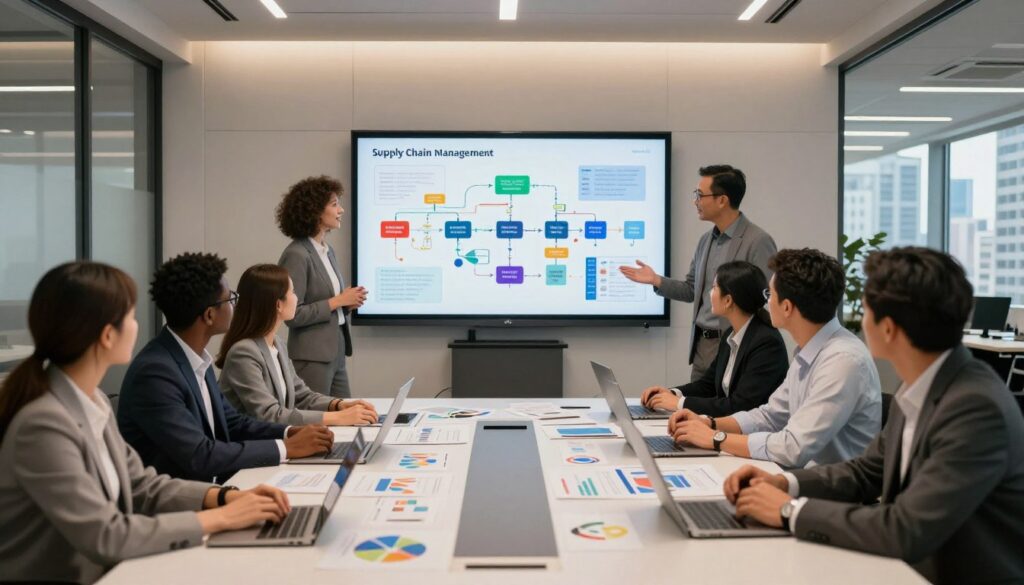
Simple strategies I implemented for immediate savings
One simple move was partnering with a third-party logistics provider. They brought expertise I lacked. This was a powerful form of avoidance.
I balanced short and long-term goals. Shipment consolidation gave us quick wins. Relocating a distribution center was a strategic play for future savings.
The biggest lesson? Be willing to change old habits. Small, consistent adjustments across the chain added up. They strengthened my business position significantly.
Streamlining Inventory and Warehouse Efficiency
A routine audit revealed a startling truth: nearly a third of my operational budget was tied up in stored goods. This matched industry data showing 25% to 35% spent on inventory management. I knew I had to streamline my processes immediately.
Implementing lean inventory practices
My first step was adopting demand forecasting. I used past sales data to predict what I needed. This eliminated guesswork and optimized stock levels.
Next, I embraced just-in-time principles. Goods arrived only as needed for customer orders. This practice minimized waste in my supply chain and freed up capital.
Optimizing warehousing for better space utilization
My physical storage needed a overhaul. I installed taller racks and designed narrower aisles. This simple change boosted my storage capacity by 40%.
I also implemented RFID tagging. My team could pinpoint any product in real time. Picking speed improved dramatically, and we gained perfect visibility into inventory levels.
These warehousing upgrades slashed labor hours. My team’s accuracy soared because they spent less time searching. The entire operation gained efficiency.
| Metric | Before Optimization | After Optimization |
|---|---|---|
| Storage Capacity | Limited by old layout | Increased by 40% |
| Average Picking Time | Slow, manual search | Cut dramatically with RFID |
| Inventory Accuracy | Prone to errors | Real-time visibility |
| Capital in Stock | High, tied up | Reduced with JIT |
The investment paid off quickly. Streamlining my inventory and warehousing created a ripple effect. I saw faster order fulfillment and much happier customers.
Leveraging Technology and AI for Enhanced Operations
The real breakthrough in my supply chain came when I started trusting data over gut instinct. I was initially skeptical about the investment. Focusing on long-term operational efficiency changed my mind.
How AI and data analytics improve demand forecasting
I implemented an AI-based forecasting system. It analyzed historical sales, seasonal trends, and market factors. This gave me remarkably accurate demand predictions.
These data analytics tools helped me balance stock perfectly. I avoided the high cost of excess inventory and the lost revenue from stockouts. My warehouse capacity was finally optimized.
Benefits of automation in tracking and inventory management
Automation transformed repetitive tasks like counting and tracking. My team was freed from manual data entry. They could focus on more valuable activities.
I also used AI for predictive maintenance and route optimization. The system monitored equipment and suggested the best delivery paths. This cut fuel use and prevented costly downtime.
Technology like blockchain improved transparency across my entire chain. All partners had the same real-time information. This reduced errors and strengthened my supplier relationships.
Optimizing Transportation and Logistics for Maximum Savings
I realized my transportation budget was bleeding money every time a truck left the warehouse half-empty. My logistics expenses were my largest and most variable cost center. It became my prime target for serious optimization.

Techniques for dynamic routing and load optimization
I implemented dynamic routing technology. It automatically calculated the most efficient delivery paths in real-time. This system adapted to traffic, weather, and road closures.
For load optimization, I ensured every truck was filled to capacity. Shipment consolidation became a standard practice. This simple step reduced the total number of trips needed.
I evaluated different transportation modes for each shipment. Trucks, rail, sea, and air each had their place. The choice depended on urgency, distance, and cargo type.
Reducing packaging waste was another win. Lighter and smaller packages directly lowered my freight charges. This also cut material costs.
I adopted zone skipping strategies for certain routes. This meant bypassing intermediate hubs to ship directly. It streamlined my entire shipping network.
Partnering with a third-party logistics provider was a game-changer. They brought expertise and technology I lacked. Their established carrier relationships secured better rates.
Collaborative logistics with suppliers and carriers improved coordination. We shared information to find mutual cost savings. This strengthened my entire supply chain.
These efforts slashed my shipping costs by over 15%. Delivery times and reliability actually improved. The efficiency gains transformed my operations.
Enhancing Supplier Relationships and Performance Management
I learned the hard way that treating suppliers as mere vendors was a costly mistake for my business’s resilience. My journey shifted from transactional interactions to building strategic partnerships. This change became a cornerstone of my supply chain strength.
Strategies to strengthen partner communication
I established regular check-ins with key partners. These meetings went beyond problem-solving. We celebrated successes and explored mutual improvement opportunities.
Transparency was my guiding principle. I shared sales forecasts and business plans openly. This helped suppliers prepare efficiently for my needs.
Negotiation tips to secure favorable terms with suppliers
I approached negotiations as collaborative problem-solving. Building trust was essential. Paying invoices consistently on time made me a valued customer.
This trust positioned me to request better terms. I implemented a formal performance evaluation system. It measured quality, reliability, and on-time delivery rates.
Clear performance metrics gave us objective goals. Long-term partnerships encouraged joint investments. These efforts reduced per-unit costs across the entire chain.
Strong supplier management transformed my operations. It created a more reliable and cost-conscious supply network.
Sustainable and Local Sourcing: A Smart Approach to Cost Reduction
My journey into sustainable sourcing began as an experiment, but it quickly became a core strategy for cutting expenses. I discovered that green practices and local procurement delivered real reduction in my operational costs.
Embracing eco-friendly practices for long-term savings
I implemented recycling programs in my manufacturing. This lowered my spending on new raw materials. A circular model focused on reusing and refurbishing parts.
I redesigned my products for easy disassembly at end-of-life. This created a process for customers to return used items. We recovered valuable materials for new product runs.
The customer response was powerful. My brand reputation improved. A new market segment valued my eco-friendly approach.
How local procurement minimizes transportation and tariff costs
Shifting to local sourcing slashed my shipping distances. It eliminated expensive international freight. My supply chain became faster and more predictable.
I avoided tariffs, customs fees, and inspection delays. Local partners allowed quick order adjustments. Communication was seamless without time zone barriers.
This flexibility built resilience in my chain. I could pivot easily during disruptions. My business adapted to changing conditions.
| Comparison Area | Local Sourcing | International Sourcing |
|---|---|---|
| Lead Time | Short, predictable | Long, often variable |
| Transportation Costs | Lower, domestic rates | High, freight + fuel surcharges |
| Tariffs & Fees | Minimal or none | Subject to customs duties |
| Communication | Easy, same time zone | Complex, with delays |
| Flexibility | High, quick adjustments | Low, rigid schedules |
Focusing on these areas transformed my manufacturing costs. Sustainable sourcing and local supply proved to be smart financial moves.
Closing Thoughts on My Supply Chain Optimization Journey
Looking back, the most profound shift wasn’t just in my balance sheet, but in how my entire team thinks about our daily work. My supply chain journey became a lesson in continuous improvement. Empowering my team to suggest changes created a culture of innovation.
This approach generated savings in unexpected areas. The five strategies I implemented worked together. Their combined effect was greater than any single change.
Regular audits and tracking key metrics kept us focused. As the saying goes, you can’t improve what you don’t measure. This discipline helped us adjust our ways quickly.
Some improvements showed value right away. Others needed time to fully deliver results. Patience was essential throughout this process.
These enhancements boosted our customer service significantly. Faster delivery time and better product availability made clients happier. My entire organization grew more resilient.
We are now better equipped to handle future challenges. The investment in my supply chain operations paid off. It strengthened my business for the long term.
I encourage anyone facing similar cost pressures to start. Even small steps in efficiency can lead to major gains. View your supply chain operations as a source of strength, not just expense.
This journey reshaped my approach to management. It proved that smart cost control and excellent service go hand in hand. The time and effort were among the best investments I’ve ever made.