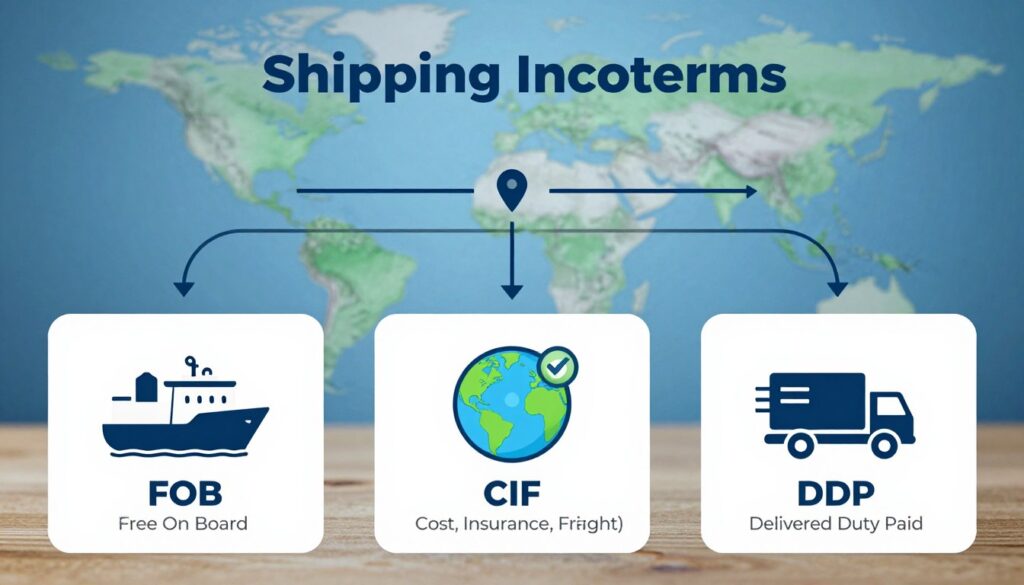

Welcome, US importers! If you’re navigating international shipping, you’ve likely encountered three-letter codes like FOB, CIF, and DDP. Understanding these terms is crucial for making smart decisions that affect your supply chain control and bottom line.
Incoterms are standardized rules created by the International Chamber of Commerce. They clearly define responsibilities between buyers and sellers in international trade. The current Incoterms 2020 version includes 11 terms that specify who handles shipping arrangements, bears risks, and manages costs.
Choosing the right option can mean the difference between smooth transactions and costly surprises. While these codes might seem confusing at first, this guide breaks down FOB, CIF, and DDP into practical information you can use immediately.
Key Takeaways
- Incoterms define responsibilities for shipping, risk, and costs in international trade
- Understanding these terms helps protect your profit margins and supply chain control
- The right choice depends on your business needs and risk tolerance
- FOB, CIF, and DDP represent different levels of buyer and seller responsibility
- Incoterms 2020 is the current standard with 11 available options
- Proper Incoterm selection prevents misunderstandings and unexpected expenses
Understanding the Role of Incoterms in Global Trade
International commerce relies on shared understanding, which is where standardized shipping terms play a crucial role. These rules create a common language that bridges different legal systems and business practices.

What Are Incoterms and Why They Matter
Created by the International Chamber of Commerce, these standardized trade rules define exactly when risk transfers from seller to buyer. They specify responsibilities for transportation costs, insurance, and customs duties.
Small and medium-sized US importers benefit tremendously from understanding these terms. Clear contracts prevent costly misunderstandings during international transactions.
“Standardized shipping terms provide the framework that makes cross-border commerce possible for businesses of all sizes.”
How Incoterms Streamline International Shipping
These internationally recognized terms create efficiency throughout the supply chain. They help all parties—from freight forwarders to customs brokers—communicate clearly about responsibilities.
The shipping process becomes smoother when everyone understands their role. This eliminates ambiguity that could lead to delays or unexpected expenses.
| Aspect | Before Standard Terms | With Incoterms |
|---|---|---|
| Risk Transfer | Unclear timing | Precise point defined |
| Cost Allocation | Frequent disputes | Clear responsibility |
| Communication | Multiple interpretations | Universal understanding |
Whether handling domestic or international shipments, these standardized rules provide essential protection for your business operations. They help importers budget accurately and maintain control over their supply chain.
FOB vs CIF vs DDP: A Comparative Overview
These three shipping terms represent varying levels of buyer and seller involvement in international transactions. Understanding their differences helps importers make informed decisions about their supply chain strategy.

Key Differences in Responsibilities and Costs
FOB, CIF, and DDP create a clear spectrum of control. FOB gives the buyer maximum control after goods are loaded. DDP places almost all responsibility on the seller.
CIF sits in the middle ground. The seller handles freight and insurance costs. But risk still transfers at the origin port.
| Term | Control Level | Seller Responsibilities | Buyer Responsibilities |
|---|---|---|---|
| FOB | Buyer Control | To port loading | Freight, insurance, customs |
| CIF | Balanced | Freight and insurance | Import procedures |
| DDP | Seller Control | Entire shipment to destination | Minimum involvement |
Cost structures vary significantly across these incoterm options. FOB may appear cheaper initially but requires more buyer expertise. DDP offers convenience but potentially higher overall costs.
Each option serves different business needs. The right choice depends on your risk tolerance and logistical capabilities.
Best Incoterm Options for US Importers
When determining which trade term aligns with your import strategy, several business-specific factors come into play. There’s no universal solution that works for every company.
Choosing the Right Term for Your Business Needs
Your company’s size and experience level heavily influence the ideal shipping arrangement. Larger firms with dedicated logistics teams often prefer terms offering maximum control.
Smaller importers may benefit from simpler options that reduce administrative burdens. Consider your staff’s expertise and existing relationships with freight forwarders.
Cash flow management is another critical factor. Different terms require payment at various supply chain stages. This affects your working capital significantly.
The nature of your goods also matters. High-value or perishable items might need closer oversight through specific shipping terms. Standard products could work well with more hands-off approaches.
Upcoming sections will explore FOB, CIF, and DDP in detail. This knowledge helps you negotiate terms that match your operational reality.
An In-Depth Look at FOB: Free on Board
For importers managing ocean shipments, FOB represents a strategic choice that balances cost control with logistical responsibility. This term specifically applies to sea freight transactions.
Seller Responsibilities and Buyer Control
Under FOB terms, the seller handles everything until goods are loaded onto the vessel. This includes proper packaging, transport to the origin port, and export clearance. The buyer’s responsibility begins once cargo crosses the ship’s rail.
This arrangement gives importers significant control. You choose your freight forwarder and negotiate ocean rates directly. You also select the carrier and arrange marine insurance.
| Party | Before Loading | After Loading |
|---|---|---|
| Seller | Packaging, port delivery, export clearance | No further responsibility |
| Buyer | Vessel booking coordination | Freight, insurance, import duties, final delivery |
How FOB Impacts Shipping Costs
While the purchase price may be lower under FOB, buyers must budget for additional expenses. These include ocean freight, insurance premiums, and destination port charges.
Importers also cover customs clearance and inland delivery costs. This approach works well for businesses with shipping expertise and established freight relationships.
FOB makes sense when you have volume to negotiate favorable rates and resources to manage logistics from the origin port forward.
Deciphering CIF: Cost, Insurance, and Freight
When convenience meets calculated risk, CIF emerges as a popular choice for international trade transactions. This arrangement bundles three key components into one package price.
The seller handles ocean freight booking and pays for basic insurance coverage. They’re responsible for getting your goods to the destination port. This creates a streamlined process for importers.
Understanding Insurance Coverage Under CIF
Under current rules, the seller must provide minimum insurance protection. This typically covers 110% of the cargo’s value. However, this basic coverage might not suit high-value items.
You should review the insurance details carefully. The seller arranges the policy, but you bear the risk during sea transit. If damage occurs, you file the claim directly.
Risk Transfer in CIF Shipments
Here’s the crucial detail many importers miss. Risk transfers to the buyer once goods are loaded at the origin port. The seller’s responsibility ends at that point.
Even though they handle freight and insurance to destination, the seller doesn’t guarantee delivery. You assume responsibility for the ocean journey despite not controlling the vessel.
| Responsibility | Seller’s Role | Buyer’s Role |
|---|---|---|
| Freight Costs | Pays to destination port | None |
| Insurance | Arranges basic coverage | Files claims if needed |
| Risk During Transit | Ends at origin loading | Begins at origin loading |
CIF works well for smaller importers without shipping expertise. It offers predictable costs and reduces administrative tasks. Just ensure the insurance meets your needs.
Exploring DDP: Delivered Duty Paid Benefits
For importers seeking maximum simplicity, Delivered Duty Paid represents the ultimate hands-off shipping solution. This arrangement places complete responsibility on the seller from origin to destination.
The seller responsible approach means your supplier handles every aspect of the shipment. They manage transportation, insurance, and all customs procedures.
Seller’s Role and Import Duty Management
Under DDP terms, the seller becomes the importer of record in the United States. They must obtain a US tax ID and handle all compliance requirements.
Import duty management falls entirely on the seller. They calculate, pay, and absorb all customs duties, taxes, and fees. This can be complex for foreign suppliers unfamiliar with US regulations.
| Responsibility | Seller’s Role | Buyer’s Role |
|---|---|---|
| Customs Clearance | Handles all procedures | No involvement |
| Duty Payment | Pays all fees | No cost responsibility |
| Final Delivery | Delivers to destination | Only unloads goods |
DDP offers complete cost predictability. Everything is included in one price. This works well for small shipments or importers without shipping experience.
However, many sellers hesitate to use DDP due to compliance complexities. They often add substantial margins to cover unknown costs.
Risk Transfers, Insurance, and Shipping Costs
Many importers focus solely on cost allocation without realizing that risk management follows different timing rules. Understanding when liability shifts is crucial for protecting your investment during international shipments.
The concept of risk transfer defines the exact moment when responsibility for goods damage or loss moves from seller to buyer. This critical point often differs from when payments occur.
Analyzing When Risk Transfers Occur
Under FOB terms, risk transfers when goods cross the ship’s rail at the origin port. The buyer assumes responsibility even though the seller handles loading.
CIF creates an interesting scenario. The seller pays for freight and insurance, but risk still transfers at origin loading. This means you bear ocean transit risks despite not controlling the vessel.
DDP offers the latest risk transfer point. Liability only shifts to the buyer when goods are ready for unloading at the final destination. The seller carries most transit risks.
Insurance coverage varies significantly between terms. CIF requires the seller to provide basic protection, while FOB leaves insurance entirely to the buyer’s discretion.
Even when sellers provide insurance under CIF, the minimum coverage may be insufficient. Consider purchasing supplemental protection for valuable shipments.
Effective risk management involves more than just insurance. Choose reliable carriers, ensure proper packaging, and work with experienced freight forwarders who understand how to minimize risks throughout the shipping process.
Comparing Shipping Costs Across Incoterms
Smart importers know that true shipping costs extend far beyond the initial purchase price. Different shipping terms allocate expenses differently between buyers and sellers.
Understanding these allocations helps you budget accurately and avoid surprises. Let’s examine how costs break down across popular options.
Evaluating Financial Implications for Importers
FOB pricing seems simple at first glance. But buyers must account for ocean freight, insurance, and destination charges.
CIF includes freight and basic insurance in the seller’s price. However, risk still transfers to you at origin loading.
DDP offers the most comprehensive cost coverage. The seller handles everything from transportation to import duties.
| Cost Component | FOB | CIF | DDP |
|---|---|---|---|
| Ocean Freight | Buyer pays | Seller pays | Seller pays |
| Insurance | Buyer arranges | Seller provides basic | Seller provides |
| Import Duties | Buyer pays | Buyer pays | Seller pays |
Remember to calculate total landed cost when comparing options. A lower FOB price might cost more overall when you add freight and insurance.
Consider both direct expenses and internal resource costs. The right balance depends on your shipping expertise and risk tolerance.
Navigating Customs Clearance and Regulatory Requirements
Customs clearance responsibilities shift dramatically depending on whether you use FOB, CIF, or DDP shipping arrangements. This critical process determines who handles paperwork, pays duties, and ensures compliance with US regulations.
Understanding Import Customs Procedures
US import procedures require specific documentation and compliance steps. You’ll need a customs bond and accurate commercial invoices. Proper classification under the Harmonized Tariff Schedule is essential.
Most US importers prefer handling their own customs clearance. This approach offers better control and direct broker relationships. You understand actual duty costs and avoid compliance issues.
| Incoterm | Customs Responsibility | Duty Payment |
|---|---|---|
| FOB & CIF | Buyer handles clearance | Buyer pays all fees |
| DDP | Seller manages process | Seller covers costs |
How Documentation Affects Trade Compliance
Accurate documentation ensures smooth customs processing. Errors in invoices or packing lists can cause delays. Serious mistakes may lead to penalties or seized goods.
Establish relationships with knowledgeable customs brokers. Ensure suppliers provide complete paperwork. Maintain proper records for compliance purposes across all your shipping activities.
Remember that regulatory requirements extend beyond duty payments. Product safety standards and agency regulations (FDA, USDA) also apply depending on your imported items.
Key Factors to Consider When Choosing an Incoterm
Selecting the right shipping arrangement requires careful evaluation of your company’s operational capabilities and strategic priorities. This decision impacts your supply chain efficiency and financial outcomes.
Balancing Responsibility with Cost Control
Every trade term creates a distinct balance between responsibility and control. Terms like FOB give you more oversight but require greater involvement. DDP offers convenience but limits your visibility.
Assess your internal resources honestly. Do you have experienced logistics staff? Established freight forwarder relationships? Your answers guide your ideal choice.
Evaluating Control Over Transportation and Insurance
Consider how much control you want over transportation and insurance arrangements. Handling these yourself can save money but demands expertise.
Your product type matters significantly. High-value items may warrant extra oversight. Standardized goods might work well with simpler terms.
| Business Scenario | Recommended Approach | Key Benefit |
|---|---|---|
| Limited logistics experience | DDP or CIF terms | Reduced administrative burden |
| Established shipping operations | FOB or FCA terms | Better cost negotiation |
| High-value products | Terms with buyer control | Enhanced risk management |
Evaluate your supplier relationships and shipment frequency. The right incoterm aligns with your specific business reality and growth objectives.
Wrapping Up Your Incoterm Strategy for International Shipping Success
As we conclude our exploration of shipping terms, remember that knowledge transforms complex logistics into manageable processes. Understanding these international trade rules gives you the power to make informed decisions that protect your business.
FOB offers maximum control with significant responsibility. DDP provides convenience but limits your oversight. CIF balances seller-arranged freight with buyer customs duties. There’s no single best solution for every situation.
Your ideal incoterm choice depends on your experience level, resources, and product type. View this as an ongoing strategic decision that evolves with your business growth. Strong supplier relationships and reliable partners complete your shipping success formula.
Start with terms matching your current capabilities. Negotiate confidently and build logistics expertise over time. These standardized rules ultimately make global trade more transparent and profitable for savvy importers.