

Are you ready to explore China easy sourcing but feel lost in international trade? Importing from China can give your business a big edge in the global market.
The world of importing from China has changed a lot. What was once seen as risky is now a chance for businesses to find top-quality products at great prices. You can find everything from the latest tech to special parts for making things.
Understanding international trade is key. This guide will help you through every step of China sourcing. It will make the process clear and help you make smart choices for your business.
Key Takeaways
- Understand the comprehensive process of China easy sourcing
- Learn strategic approaches to finding reliable suppliers
- Discover methods to mitigate risks in international importing
- Gain insights into quality control and compliance requirements
- Develop skills for effective communication with Chinese manufacturers
Understanding the Fundamentals of Importing from China
Understanding China’s role in global trade is key. Chinese manufacturers have changed the game for businesses looking to save money and find new ideas. They offer cost-effective and innovative solutions.
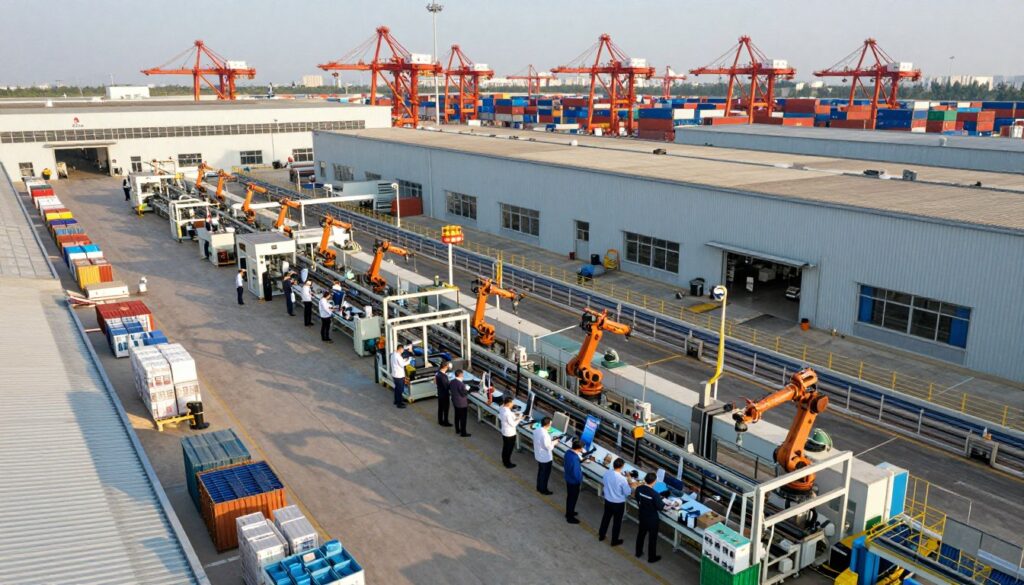
But it’s not just about saving money. China’s manufacturing scene is complex. It involves advanced production, new technologies, and economic growth.
Why China Remains a Top Manufacturing Hub
China leads in manufacturing for many reasons:
- Extensive industrial infrastructure
- Specialized manufacturing clusters
- Highly skilled workforce
- Government support for industrial development
Places like Shenzhen are famous for electronics, while Dongguan is known for textiles. These areas have efficient supply chains. They make production faster.
“China’s manufacturing ecosystem is not just about cheap labor, but about sophisticated production capabilities and innovation.” – Manufacturing Expert
Key Benefits of Sourcing Products from Chinese Suppliers
US businesses can gain a lot from China trade:
| Benefit | Description |
|---|---|
| Cost Efficiency | 30-70% lower production costs compared to domestic manufacturing |
| Product Diversity | Access to unique products and components unavailable domestically |
| Scalability | Flexible production from prototypes to mass manufacturing |
Today, Chinese manufacturers do more than just make things cheap. They offer advanced design, quick prototyping, and the latest production methods. This makes them leaders in innovation.
Identifying Your Product and Market Needs

Starting a successful product sourcing journey in China requires a clear understanding of your market and product needs. Your import business thrives on thorough preparation before you connect with wholesale suppliers in China.
Creating a detailed product strategy involves several key steps:
- Conduct thorough market research to validate product demand
- Define precise product specifications
- Analyze competitive landscape
- Establish realistic pricing structures
When planning your product sourcing strategy, make a detailed specification sheet. It should include:
- Exact product dimensions
- Preferred materials
- Color variations
- Quality standards
- Packaging requirements
“Know your product inside and out before approaching Chinese manufacturers” – Global Sourcing Experts
Knowing the minimum order quantities (MOQs) is key in the China import business. MOQs usually range from 500-1000 units. This means you need to plan your finances carefully. Figure out how much inventory you’ll need, balancing storage space with market demand.
Your product specification sheet is your guide for successful sourcing. Add reference images, technical drawings, and clear quality expectations. This helps avoid misunderstandings with potential suppliers.
Pro tip: Look into your product’s Harmonized Tariff Schedule (HTS) classification early. It affects import duties and regulations, which can impact your business’s success.
Finding Reliable Chinese Suppliers and Manufacturers
Finding trustworthy manufacturing partners in China requires a strategic approach. Businesses need to know how to connect with potential suppliers. This includes understanding different channels for finding them.

Utilizing Online B2B Marketplaces Effectively
Online B2B marketplaces like Alibaba.com have changed the game for sourcing from China. They offer great chances for businesses to meet manufacturers directly. To make the most of these platforms, consider the following strategies:
- Use advanced search filters to find specific products
- Look at supplier badges and verification levels
- Compare prices from different suppliers on Alibaba
- Ask for detailed product specifications
Attending Trade Shows and Industry Events
Trade shows in China are a top way to find potential partners. The Canton Fair, held twice a year in Guangzhou, is a key event. It offers many benefits, such as:
- Meeting suppliers in person
- Checking product quality right away
- Negotiating prices directly
- Seeing how products are made
Working with Sourcing Agents and Third-Party Services
A professional sourcing agent can make finding reliable manufacturers easier. They know the local market well and can help with communication. If you’re dealing with complex products or don’t have direct connections, consider using a sourcing agent.
The best approach depends on your business needs, product complexity, and budget. Online marketplaces, trade shows, or sourcing agents each have their own benefits for finding quality Chinese suppliers.
Vetting and Verifying Potential Suppliers
Choosing reliable Chinese manufacturers is key. A thorough verification process is vital. It protects your business from risks and ensures quality.
When looking at China suppliers, use these important steps:
- Ask for business licenses and export certifications
- Check company registration on China’s National Enterprise Credit Information System
- Look for quality certifications specific to your industry
- Review audited financial statements
Virtual factory tours offer great insights. During video calls, focus on:
- Production equipment quality
- Workforce size and organization
- Quality control processes
- Raw material storage conditions
Third-party services like SGS and Bureau Veritas do factory audits. These cost $200-$500 and give detailed reports on a manufacturer’s capacity and legitimacy.
Pro tip: Always ask for references from current clients in your field to check a supplier’s reliability and performance.
Good supplier verification reduces risks when buying from Chinese manufacturers. It safeguards your investment and helps in smooth trading.
China Easy Sourcing: Navigating Communication and Language Barriers
Understanding cultural communication is key to successful China easy sourcing. It’s important to bridge language gaps with respect for Chinese business etiquette and norms.
Essential Chinese Business Etiquette Tips
Mastering cultural expectations is crucial when communicating with Chinese suppliers. The concept of mianzi (face) is vital in business talks, needing careful and respectful dialogue.
- Avoid direct public criticism or confrontational language
- Prioritize relationship-building before business discussions
- Understand hierarchical decision-making processes
- Practice patience during negotiations
Business card exchanges are a big deal in China. Always give and receive cards with both hands, showing respect. Remember, a polite “yes” might mean they understand, not agree.
Tools and Strategies for Clear Communication
Effective communication with Chinese suppliers needs smart tech and language strategies. Choose platforms that make international talks easy.
| Communication Platform | Best Use | Effectiveness Rating |
|---|---|---|
| Primary Business Communication | High | |
| Supplementary Communication | Medium | |
| Formal Documentation | High |
Work with suppliers who have English-speaking staff. Use simple language and avoid complex sayings. Pictures and drawings help get your point across, even without speaking the same language.
- Confirm understanding by requesting summary of agreements
- Document all discussions in writing
- Use translation tools cautiously
- Speak slowly during video calls
Getting good at talking with Chinese suppliers can turn challenges into chances for success in international sourcing.
Negotiating Prices and Payment Terms
Mastering supplier negotiation in China needs a strategic plan and understanding of the culture. It’s not just about lowering prices. Successful importers know how to handle the complex world of international sourcing.
When dealing with payment terms in China, keep these strategies in mind:
- Request multiple quotations from 5-7 different suppliers
- Understand typical pricing structures that start 15-30% above actual cost
- Leverage order volume for better pricing
- Build long-term relationship potential
Effective payment terms in China often follow a structured approach. Most new relationships start with a 30% deposit upon order confirmation and 70% balance before shipment. As trust grows, you can negotiate better terms.
Common payment methods include:
- Wire transfer (most standard method)
- Letter of Credit for larger orders
- Platform escrow services like Alibaba Trade Assurance
Pro tip: Never pay 100% upfront without significant guarantees.
Pricing negotiation needs careful preparation. Break down quotations into material costs, labor, tooling, and profit margins. This detailed approach shows you understand the sourcing process well.
Remember, small price cuts can make a big difference in costs for large orders. Being patient, respectful, and strategic is key to successful negotiations in China.
Understanding Import Regulations and Compliance Requirements
Importing goods from China can be tricky for businesses. It’s all about knowing US import rules and following customs clearance steps. Import compliance involves many government agencies and detailed paperwork.
U.S. Customs Regulations and Documentation
Importers need to prepare detailed documents for customs. Key documents include:
- Commercial invoice
- Detailed packing list
- Bill of lading or air waybill
- Arrival notice
The Harmonized Tariff Schedule (HTS) code is important. It helps figure out duty rates and rules. Getting the product classification right can save money and ensure compliance.
| Document Type | Purpose | Key Requirement |
|---|---|---|
| Commercial Invoice | Declare product value | Must reflect accurate pricing |
| Customs Bond | Financial guarantee | Required for shipments over $2,500 |
| Importer Security Filing | Security clearance | Must be filed 24 hours before shipment |
Product Safety Standards and Certifications
Import rules go beyond paperwork. Each product type needs special certifications from different agencies:
- FDA: Food, drugs, cosmetics, medical devices
- CPSC: Consumer product safety
- FCC: Electronics with radio frequencies
- EPA: Environmental compliance
Importers must ensure products meet standards. Working with certified labs and knowing agency rules is key to avoiding problems.
Proactive compliance management can save significant time and prevent costly import disruptions.
Managing Quality Control and Product Inspections
Importing from China needs strict quality control. Product inspections are key to avoid manufacturing risks. Without quality checks, businesses can lose money and harm their reputation.
In China, quality control is a detailed process. It covers all production stages. Importers must use full inspection services to meet product standards.
Pre-Production Inspections: Setting the Foundation
Pre-production inspections are the first defense in quality control in China. They happen before mass production starts. They check:
- Raw material specifications
- Component accuracy
- Color and measurement alignment
- Manufacturer’s understanding of requirements
During Production Monitoring: Catching Issues Early
During production inspections (DUPRO) are for real-time quality checks. They happen when 20-40% of the order is done. These checks help:
- Identify potential manufacturing problems
- Verify production schedules
- Confirm quality consistency
Pre-Shipment Final Inspections: Last Quality Checkpoint
Pre-shipment inspections are the most important quality step. They happen when 80-100% of goods are ready. These checks focus on:
- Visual defect identification
- Functional testing
- Specification verification
- Packaging quality assessment
Professional inspection services cost $200-350 per day. This is a small price compared to the cost of bad inventory.
| Inspection Type | Timing | Key Focus |
|---|---|---|
| Pre-Production | Before Manufacturing | Material & Component Verification |
| During Production | 20-40% Completion | Process Monitoring |
| Pre-Shipment | 80-100% Completion | Final Quality Verification |
Investing in thorough product inspection is not an expense, but a strategic approach to protecting your import business and ensuring customer satisfaction.
Choosing the Right Shipping Method and Logistics Partner
Choosing the right shipping method is key for successful international shipping from China. Your choice affects delivery time, cost, and your import strategy. Knowing about freight forwarding and China logistics can save your business a lot of time and money.
There are two main shipping methods for international shipping from China:
- Ocean Freight: Most economical for large shipments
- Typical transit time: 20-40 days
- Cost-effective for bulk cargo
- Multiple container options available
- Air Freight: Fastest but most expensive option
- Delivery within 3-7 days
- Ideal for urgent or high-value shipments
- Typically 5-10 times more expensive than ocean freight
When dealing with China logistics, it’s crucial to partner with experienced freight forwarders. They handle complex shipping needs, manage documents, and make customs clearance easier.
When picking a logistics partner, consider these points:
- Get quotes from several freight forwarders
- Check their reputation and references
- Make sure you understand all shipping costs
- Verify their expertise in international shipping from China
Protect your investment by considering cargo insurance. Also, understand international commercial terms (Incoterms) that outline shipping duties between buyers and sellers.
Calculating Total Landed Costs and Profit Margins
Importing products from China is more than just the factory price. It’s important to know the landed costs to keep your business profitable. Landed costs are the total cost from the factory to your warehouse, usually 25-40% more than the product price.
To make money from imports, you need to understand all costs. The total cost includes many parts that can affect your profit.
Hidden Costs in Your Import Budget
Many businesses forget about important expenses when calculating import costs:
- Product samples and shipping
- Quality inspection fees
- International shipping expenses
- Customs clearance and broker fees
- Inland transportation
- Warehousing and storage
- Payment processing charges
- Currency exchange fluctuations
A product priced at $5 can cost up to $8.50 after all expenses. Smart importers find ways to reduce these costs.
Navigating Import Duties and Tariffs
Import duties are a big part of total costs. Duty rates can be from 0% to 37.5%, with most goods between 3-15%. You need to know your product’s HTS code to figure out duties.
Here are some ways to manage import costs:
- Consolidating shipments
- Negotiating better shipping rates
- Using efficient customs brokers
- Carefully planning order volumes
Good importers usually aim for a 2.5-4x markup for wholesale and 4-8x for retail. This helps cover all costs and make a profit.
Protecting Your Intellectual Property in China
Importers face challenges when dealing with intellectual property in China. The IP protection has gotten better, but risks are still there for companies buying products from Chinese makers.
To keep your intellectual property safe, you need a smart plan. Important steps for protection include:
- Trademark registration in China through the China National Intellectual Property Administration (CNIPA)
- Filing design and utility patents for unique product features
- Implementing robust Non-Disclosure Agreements (NDAs)
- Carefully managing product design sharing
The first-to-file system in China makes trademark registration very important. Companies must act fast to protect their brand rights before others can.
Here are some practical steps for IP protection:
- Register trademarks and patents before launching your product
- Work with reputable suppliers who have clients worldwide
- Use multiple suppliers for different product parts
- Create strong contractual protections in Chinese language
While perfect IP protection is hard, smart steps can lower risks. Companies should focus on quick market entry and building their brand while keeping legal protections in mind.
Remember: Protecting your intellectual property is an ongoing process that requires vigilance and proactive planning.
Building Long-Term Relationships with Chinese Suppliers
Building strong supplier relationships in China is more than just buying and selling. The idea of guanxi – a network of personal connections – is key. Turning your supplier interactions into lasting partnerships can make importing much better.
Good supplier relationships need regular and meaningful talks. Here are some tips for building strong partnerships:
- Maintain regular contact beyond order placement
- Share your business growth plans transparently
- Visit suppliers in person when possible
- Recognize Chinese business customs and holidays
- Provide constructive feedback respectfully
Trust is vital in long-term partnerships. Chinese suppliers look for businesses that:
- Make payments on time
- Treat them fairly and with respect
- Understand market challenges
- Work together to solve problems
| Relationship Stage | Key Actions | Expected Outcomes |
|---|---|---|
| Initial Engagement | Small test orders | Assess supplier reliability |
| Growing Partnership | Increased order volumes | Better pricing and priority |
| Strategic Collaboration | Annual contract negotiations | Proactive product improvements |
Building strong supplier relationships in China takes time, understanding, and a real commitment to grow together. By putting in the effort, you’ll build a strong network that helps your business grow.
Common Pitfalls to Avoid When Sourcing from China
Dealing with China’s complex sourcing world needs a smart plan and sharp eyes. Many challenges can mess up your business goals. Knowing the red flags and common mistakes is key to buying goods from abroad.
Buying from China offers great chances but also big risks. Spotting unreliable suppliers early can save your business a lot of trouble and money.
Red Flags That Indicate Unreliable Suppliers
- Requesting 100% upfront payment through untraceable methods
- Providing prices significantly below market rates
- Using free email domains instead of professional company emails
- Reluctance to share business licenses or factory verification documents
- Poor communication or evasive responses to direct questions
“Trust, but verify” is the golden rule when sourcing from international suppliers.
Mistakes That Can Derail Your Import Business
China sourcing pitfalls can come from small mistakes. Experienced importers say to watch out for these big errors:
- Skipping sample orders before full production
- Inadequate product specification documentation
- Neglecting compliance and certification verification
- Underestimating total landed costs
- Failing to inspect products before shipment
Knowing these challenges helps importers plan better. They can avoid risks and build strong supplier relationships.
| Risk Category | Potential Impact | Prevention Strategy |
|---|---|---|
| Financial Risks | Unexpected Cost Overruns | Comprehensive Cost Analysis |
| Quality Risks | Product Defects | Third-Party Inspections |
| Communication Risks | Misunderstandings | Clear Documentation |
Diligence and preparation are your best defense against potential sourcing challenges.
Conclusion
Starting an import business with Chinese suppliers is a smart move for entrepreneurs and businesses. It offers a chance to gain a competitive edge. To succeed, you need to be dedicated, well-prepared, and open to learning.
Success in importing is not just about finding cheap products. It’s about doing thorough research, building strong communication, and ensuring quality. You also need to form lasting relationships with reliable suppliers. Each step helps you improve and create a solid import plan.
Begin with small orders and grow gradually. Many importers started small and learned a lot along the way. Be ready to learn, adapt, and see challenges as chances to grow. With good planning and a strategic approach, your venture can lead to business growth and profits.
Success in importing is achievable. With the right knowledge, preparation, and a commitment to getting better, you can overcome obstacles. Start your research, take the first step, and work towards a strong and profitable international sourcing strategy.