
Navigating global sourcing can be a game-changer for your business. I’ve put together this guide to help you build a robust system that safeguards your operations.
Maintaining high standards directly affects your success. It leads to happy customers and strong long-term profitability.
The manufacturing power of China offers incredible opportunities. You get competitive pricing and massive scale. Yet, consistent excellence is the real differentiator between winning and facing costly setbacks.
In this guide, I’ll share practical strategies and inspection methods I rely on. You’ll learn best practices for ensuring product integrity at every stage.
This isn’t just about catching defects. It’s about creating systematic processes that protect your brand’s good name. It ensures every delivery meets your expectations.
We’ll tackle real-world hurdles like communication gaps and maintaining uniformity across large production batches. My focus is on actionable steps any company can use right away.
Key Takeaways
- Building a strong system for your supply chain is essential for business health.
- High product standards are directly tied to customer satisfaction and profit.
- China’s manufacturing scale offers value, but consistency is key to success.
- Proactive processes protect your brand reputation more than just finding flaws.
- Practical strategies can overcome common challenges like language barriers.
- Actionable steps in this guide are designed for businesses of all sizes.
Introduction and the Importance of Quality Control
Understanding the core value of verifying standards is what separates successful importers from those facing constant headaches. This process ensures manufactured items meet set criteria through testing and inspection.
A streamlined approach gives you consistent verification. It means fewer batch variations and improved client retention.
Why I Value Quality Control
I see this as the backbone of my operation. It makes sure every item I receive matches my specs before it reaches my market.
This system builds trust throughout my entire supply chain. It shields my venture from the expensive errors that come with faulty goods.
The impact on client happiness is direct. When I deliver high-standard items regularly, my customers come back and advocate for my brand.
| Scenario | With Effective Verification | Without Effective Verification |
|---|---|---|
| Customer Satisfaction | High retention & positive reviews | Increased complaints & negative feedback |
| Financial Impact | Reduced losses from defects | Costly recalls, returns, and refunds |
| Operational Flow | Smooth, predictable shipments | Disruptions and delayed timelines |
| Brand Reputation | Strong, dependable image | Risk of lasting damage |
Trust is the currency of a reliable supply chain; it’s earned through consistent verification, not just promised.
Avoiding Costly Mistakes
Catching flaws early in production is far cheaper. Dealing with returns or a damaged brand after items hit the shelves is a nightmare.
Problems can start at any production stage. Without robust checks, I risk receiving goods that don’t fit my needs.
This gives me peace of mind. I know my products will meet expectations and maintain the consistency my reputation relies on.
The Fundamentals of Quality Control in Imports from China
The core of any successful sourcing strategy lies in setting unambiguous benchmarks from day one. Without these, evaluating goods becomes subjective and unreliable.

Establishing Clear Quality Benchmarks
I start by defining exactly what acceptable items look like for my business. This means being explicit about dimensions, materials, and functionality. I also set maximum tolerances for any variations.
My product specifications must leave no room for guesswork. I include technical drawings, material requirements, and packaging expectations. This clarity eliminates ambiguity from the start.
I develop three distinct plans to guide production. A Product QC plan outlines my expectations for capabilities and final goods. A Process QC plan details how to address issues during manufacturing. A New product QC plan ensures timeline adherence for first-time projects.
These benchmarks are measurable and often based on international norms. I document everything in writing and share it during initial talks. This foundation makes all future inspections objective and effective.
Implementing Quality Control Measures for Imports from China
Taking charge of product integrity means building a process that leaves nothing to chance. The responsibility for this system rests with me, not the manufacturer.
My first step is complete transparency. I share detailed specifications and testing requirements upfront. This clarity sets the stage for everything that follows.
Partnering with the right vendors is crucial. I conduct deep audits of their plant and existing procedures. This vetting ensures they can meet my benchmarks.
I also integrate third-party checks for unbiased feedback. My final plan clearly maps out inspection points and acceptance criteria.
| Implementation Step | My Action | Primary Benefit |
|---|---|---|
| Setting Requirements | Share exact specs & tolerances | Eliminates ambiguity from the start |
| Supplier Vetting | Conduct on-site capability audits | Confirms partner reliability and skill |
| Inspection Planning | Define checkpoints & acceptance rules | Catches issues early, ensures consistency |
These steps require an upfront investment of time. That investment saves me from far costlier problems later. A solid process protects my brand and my customers.
Inspection Stages: From Pre-Production to Pre-Shipment
Catching flaws early and often is my strategy. I schedule inspections at three critical junctures.
This layered system gives me oversight from raw materials to packed boxes. It prevents surprises.

Pre-Production Inspection
I start before manufacturing begins. This stage involves checking all components and raw materials.
It confirms my supplier’s inputs match my specs. This saves significant time and money later.
During Production Inspection
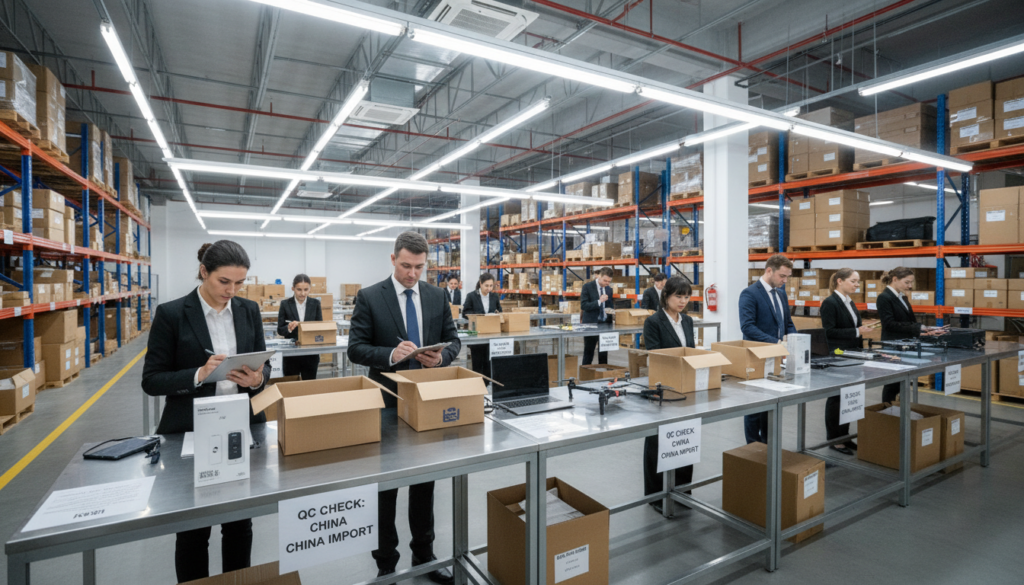
I conduct this check when about 50% of goods are made. My team visits the factory for random sampling.
We verify items against product specifications and compliance rules. Finding issues here allows for mid-process corrections.
Pre-Shipment Inspection
This is my final review before shipping. It happens when production is 80-100% complete.
I look for major and minor defects. I also check packaging and verify quantities. It’s my last safety net.
| Inspection Stage | Key Focus | Primary Value |
|---|---|---|
| Pre-Production | Raw materials & components | Prevents problems at the source |
| During Production | Partially finished goods | Allows for corrections in real time |
| Pre-Shipment | Final packed products | Provides last-chance verification |
Collaborating with Reliable Suppliers and Third-Party Inspections
Selecting the right production partner goes beyond price. It’s about trust and proven capability.
I build my supply chain on strong alliances. This foundation ensures consistent product excellence.
Conducting Supplier Audits
I always visit a factory before placing a large order. This audit checks their machinery and workforce.
I look for certifications like ISO 9001. It shows their commitment to international standards.
My goal is to verify their ability to meet my product specifications. Seeing their process firsthand builds confidence.
Leveraging Third-Party Experts
Independent inspectors provide an unbiased view. Firms like SGS offer deep factory audits.
They handle compliance checks and safety testing. This adds a crucial layer of assurance for my business.
These experts catch issues I might miss. Their reports guide my final shipping decisions.
| Verification Method | Primary Focus | Key Advantage |
|---|---|---|
| In-House Supplier Audit | Factory capabilities & relationship building | Direct understanding of partner’s operations |
| Third-Party Inspection | Objective product & process assessment | Unbiased compliance and safety verification |
| Sourcing Agent Support | End-to-end process management | Local expertise and routine checks |
Overcoming Common Challenges in Quality Control
Even with the best plans, real-world hurdles can test your verification system. I face several common obstacles when managing my supply chain.
Addressing Language and Communication Barriers
Conveying my exact requirements can be difficult due to language differences. I’ve overcome this by hiring local verification experts.
These professionals understand both my needs and local factory practices. They act as a bridge, ensuring clear communication.

This prevents misunderstandings that lead to product issues. Being explicit about my specifications eliminates any ambiguity.
Managing Inconsistent Product Quality
Sometimes the first batch is perfect, but later ones falter. This inconsistency is one of the most frustrating issues.
I address it by conducting random, unannounced inspections. These visits give me a true picture of typical production levels.
Geographical distance makes personal visits hard for every run. Partnering with local inspection firms is essential for regular checks.
Cultural differences also affect business relationships. I invest time in understanding these practices. Showing respect improves cooperation and outcomes.
I document all issues thoroughly. This helps identify patterns and work with my supplier on fixes.
The way I approach problems matters. Framing them as improvement opportunities motivates better performance over time.
| Common Challenge | My Practical Solution | Key Benefit |
|---|---|---|
| Language Barriers | Hire local QC experts or agents | Clear communication, fewer errors |
| Inconsistent Batches | Random unannounced inspections | Accurate monitoring of standards |
| Geographical Distance | Partner with local inspection firms | Regular on-site checks without travel |
| Cultural Differences | Understand and respect local practices | Stronger, more cooperative relationships |
Best Practices for Ongoing Quality Monitoring
My work doesn’t end after the first successful shipment. It’s about building systems that ensure lasting excellence.
This means moving beyond scheduled audits. I create habits that maintain high standards every single day.
Regular Communication and Feedback
I establish clear feedback loops with my suppliers. Sharing specific notes quickly is my priority.
This open dialogue helps us fix small issues before they grow. It turns problems into partnership opportunities.
Utilizing Technology for Real-Time Checks
I use digital tools to enhance my oversight. A Quality Management System tracks all my verification data.
For sensitive items, I explore IoT sensors. They monitor conditions like temperature in real time.
This technology gives me eyes on the production floor from anywhere.
Commitment to Continuous Improvement
I treat my entire approach as a living process. Every batch teaches me something new.
I review supplier performance with hard numbers. Defect rates and on-time delivery percentages guide my decisions.
Customer reviews are also a goldmine. They often spot flaws my team might miss.
| Monitoring Method | My Key Action | Primary Outcome |
|---|---|---|
| Supplier Feedback Loops | Share inspection results immediately | Faster corrections, stronger relationships |
| Technology Integration | Use QMS software & IoT sensors | Real-time data, trend identification |
| Performance Reviews | Analyze metrics like defect rates | Data-driven partner management |
| Customer Insight Mining | Act on review feedback | Product refinements that boost satisfaction |
These best practices form a cycle that keeps getting better. It’s how I build a truly resilient supply chain.
Conclusion
Long-term success in global trade depends on a foundation of trust and verified results. The systematic approach I’ve shared is crucial for any operation sourcing overseas.
Viewing this process as a core investment protects your brand. It reduces costly returns and builds strong customer loyalty.
Implement the strategies: set clear standards, audit partners, and use independent experts. Consistency in your supply chain is non-negotiable.
Putting these practices in place today safeguards your reputation tomorrow. It turns sourcing into a reliable pillar for growth.